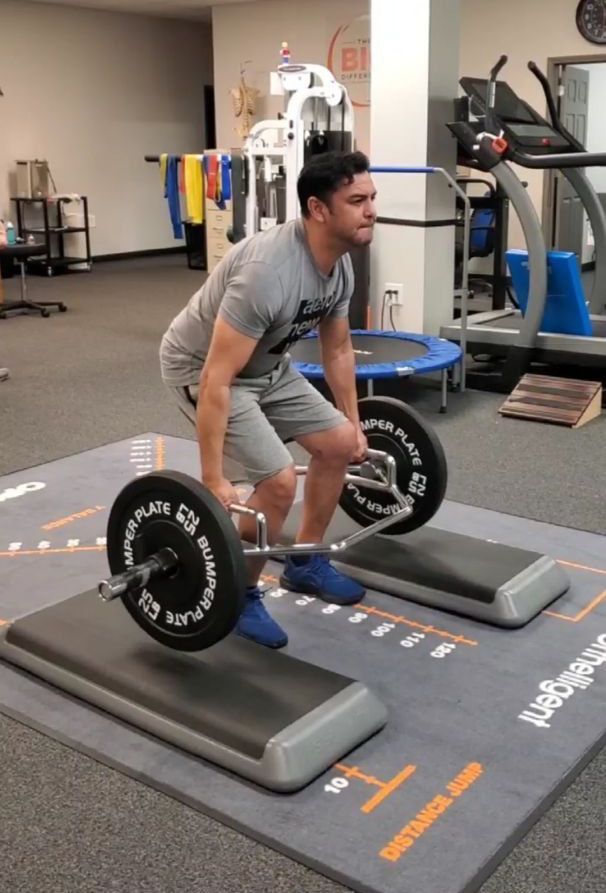
The Importance of Strength Training &
How Physical Therapy Can Help
Are you an athlete who wants to get back on the field following a sports injury? A mom trying to keep up with toddlers? Or a 70-year-old who has difficulty getting out of a seat due to severe back pain? The great news is, regardless of what season of life you’re in or what your personal goals are, strength training can help improve your quality of life and help make your body more capable and more resilient to bounce back from setbacks such as injuries or illnesses. This discussion will focus on what strength training is and how Physical Therapy can help you navigate how to begin strength training even during the presence of pain.
What is Strength Training?
As we age, we lose muscle mass through a process called “sarcopenia”. This is normal and it happens to everyone. Generally speaking, muscle mass can decrease by 5-10% each decade after the age of 30. Fortunately, we can significantly reduce this process and even reverse muscle loss by performing exercises that keep our muscles strong.
Strength training is defined as physical activity designed to improve muscular strength and fitness by exercising specific muscle groups against an external resistance. These external resistances can include: free weights, exercise machines, and even your own body weight. Research has shown that strength training can improve cardiovascular health, bone density, reduce risk of future diseases, can help reduce depression & anxiety, increase muscle mass, reduce body fat composition, and even decrease pain. If all that isn’t enough, regular strength training has even been shown to help you live longer.
A meta-analysis published in February 2022 found that people who perform resistance training are less likely to die prematurely than those who don’t, even if aerobic exercises are not part of their current exercise routine. Just 1-2 workouts per week consisting of 3-4 exercises can be more than adequate for most. These exercises should have working sets that range between 8-12 repetitions nearing failure for appropriate stress levels to promote improved strength. Even lighter weights can increase strength, but heavier weights are your best bet for increasing muscle mass and increasing your strength. The important thing is to find a weight that challenges you. If you are dealing with pain or an injury, find a weight that is challenging, but does not increase the symptoms you’re currently having. Relying on cardiovascular exercises (such as walking), while important for maintaining mobility, will not maintain muscle mass or strength as effectively as lifting weights will. Strength training is critical to our overall health and is not only for professional athletes or bodybuilders.
How can Physical Therapy Help
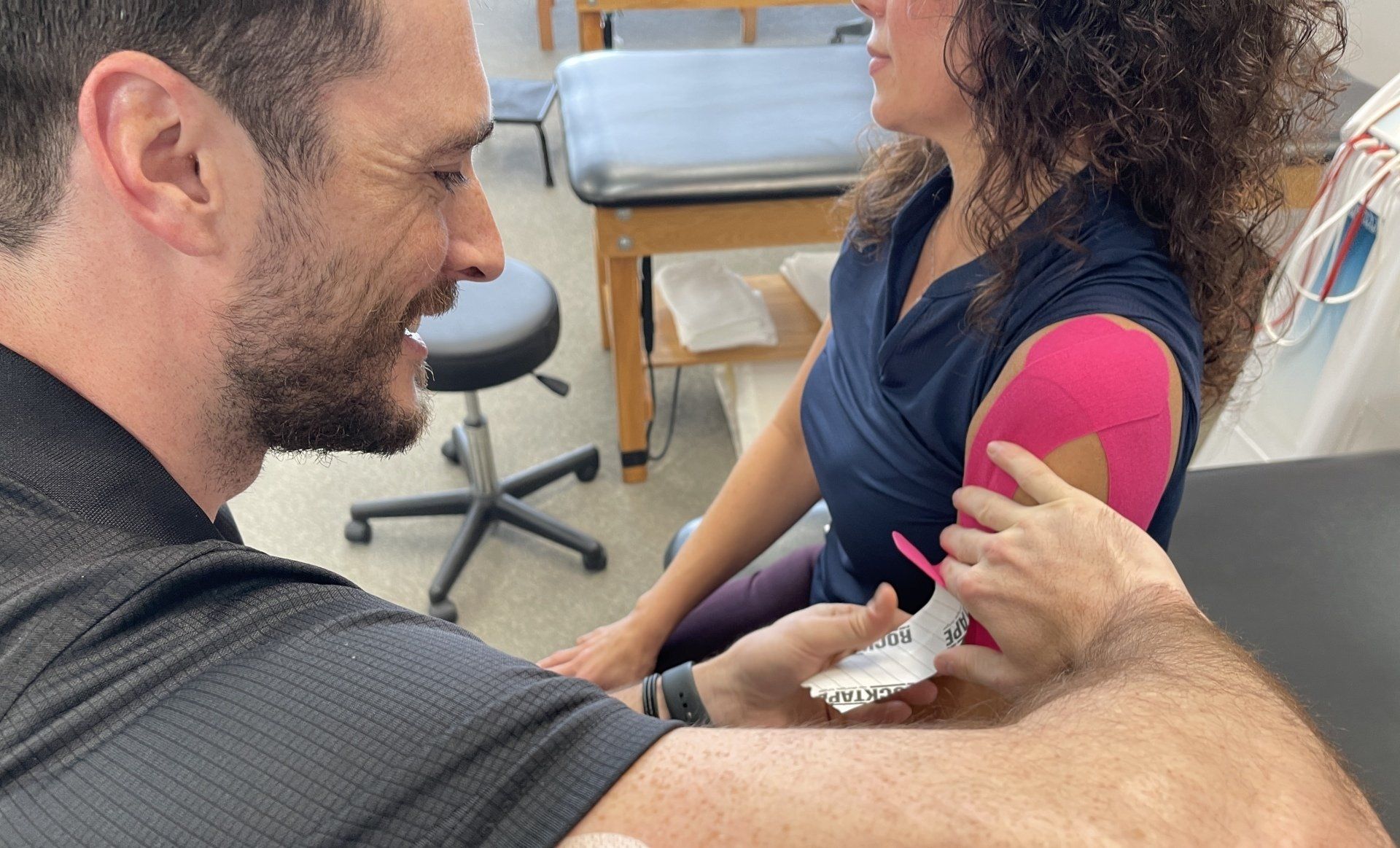
It can be intimidating to lift weights because you might not know what exercises to do, might not have access to gym equipment or you might have a nagging injury and think lifting weights will increase the pain or even make your injury worse. Fortunately, Physical Therapists are expert rehab specialists and can help calm any concerns about sources of pain and rule out any pathologies. An important consideration is that the presence of pain DOES NOT necessarily mean there is something structurally wrong or damaged. Additionally, we are experts at navigating exercises despite the presence of pain and can provide exercise modifications and pain-relieving treatments such as dry needling and shockwave therapy to reduce the perception of pain so that you can remain active and meet your exercise goals. If an anatomical issue is suspected, physical therapy can help with exercise modification and prescription of appropriate exercise regressions dependent upon your specific goals. In many cases, brief activity modification can help you avoid surgeries and the lengthy recovery process associated with them despite the presence of anatomical abnormalities such as rotator cuff injuries or meniscus tears. So, whether your goal is to be able to press a 200-pound bar over your head or be able to retrieve a gallon of milk from the fridge without pain, the Physical Therapists at BIG can help guide you on your journey to becoming stronger.
Common Questions From Patients
If something hurts, it’s causing more damage or preventing healing, right?
Shouldn’t I rest my injury?
Is it safe to lift weights?
I would rather focus on stretching, I don’t want to get too bulky
How to Continue Lifting While Injured
Adjust Range of Motion
Often, specific ranges of motion are where the irritated tissue gets bothered the most. Limiting the range of motion to temporarily avoid those ranges can be a great way to continue training hard and heavy without slowing tissue healing and causing excessive pain.
Use Different Variations
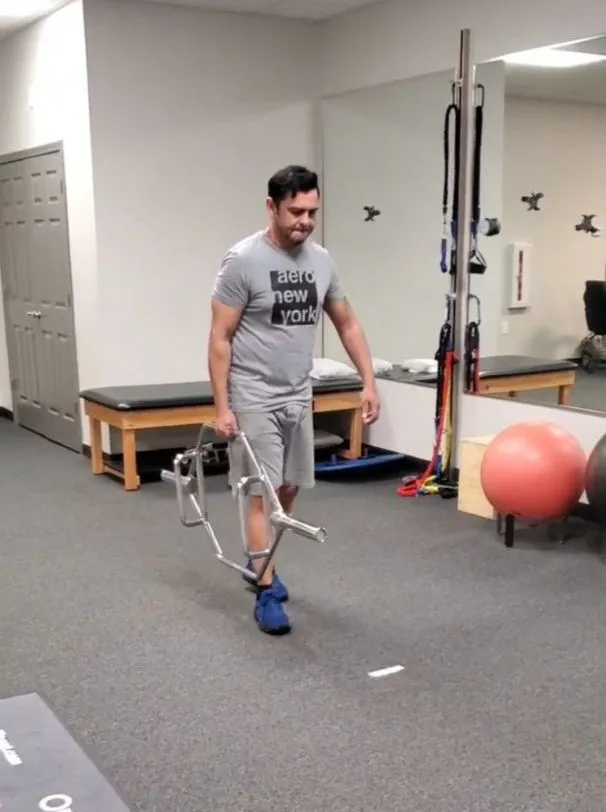
Small changes to the exercise variation you train will often adjust the loading on healing muscles and joints enough to allow continued training. Try changing your grip, angle of movement, depth of movement, and levels of assistance to accommodate while dealing with heightened levels of pain.
For example, if squats are an irritating movement due to nagging knee or hip pain, opt for doing box squats or squats to a chair instead. This will allow you to separate the lowering and raising portion of the movement which can decrease the stress on your knees or hips. The brief pause on the chair/box allows for preparation for the next phase of the movement, which is typically more tolerable for those who have pain with squats. This allows you to continue loading your muscles heavily, but in a more tolerable manner until you’re able to return back to normal squats.
Experimenting with different exercise variations not only helps manage pain but also provides an opportunity to discover what works best for your body, facilitating a more personalized and effective training routine.
Unload Irritated Tissues
Occasionally a muscle or joint will need to be completely unloaded when healing. Getting more creative with our exercise setup can allow us to continue loading other muscles still tolerating a training volume.
For example, in someone with low back pain not tolerating compressive loading very well or a post-op shoulder, barbell squat variations may not be possible. Doing a belt squat is one great option to continue loading the legs without risking irritating these healing tissues.
Lighten Load & Perform More Volume
If a joint or muscle cannot tolerate heavy loads, try training with lighter loads with more volume/repetitions. While higher volume loads may not have the greatest effect on strength production, we can still use this method to continue stressing our muscles and joints to produce a positive training effect. After all, training with higher volumes but lighter weights is better than not training at all.
Train Unilaterally
Research has shown that training the uninjured side can help to maintain strength and muscle mass on the injured extremity. There are multiple neurologic and hormonal theories for why this may occur, but the key point is that unilateral training is significantly better than no training.
While many may fear doing this will create greater deficits with side-to-side strength and muscle mass, because you may think that not training the injured side will result in muscle and strength loss while training the uninjured size will lead to muscle and strength sides, the opposite appears correct. Once the healing process progresses, we can begin using the above strategies to begin rebuilding fitness in the injured side.
Building Strength and Wellness with Back in the Game
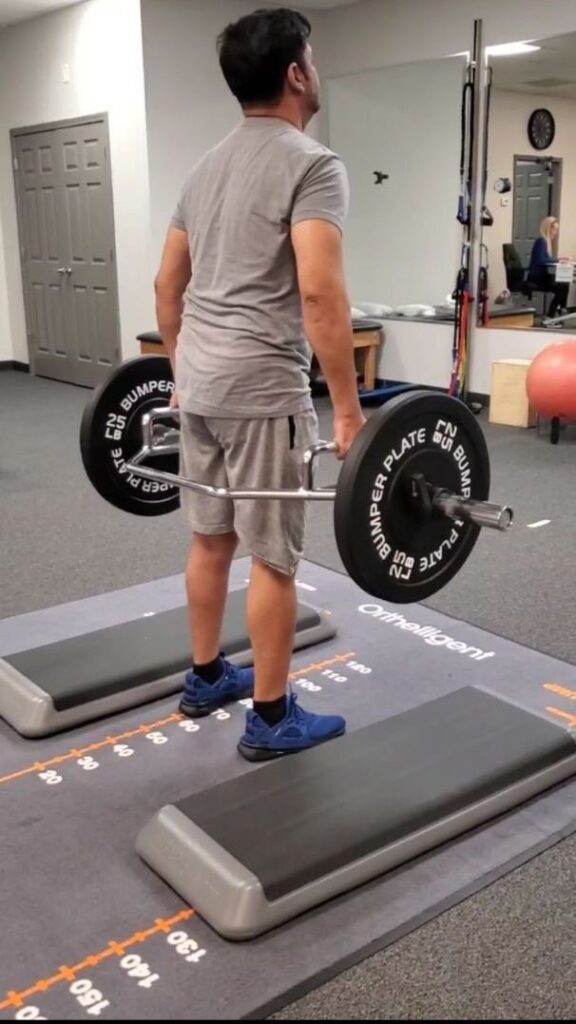
For those who do not currently have a known injury, there are a few basic concepts that you can focus on to ensure that you begin a habit that is repeatable and sustainable. At Back in the Game, our Physical Therapists can help guide you on a sustainable exercise progression to help optimize performance and return to physical activity to accomplish your goals. Firstly, it is smart to start conservatively, especially if you are new to strength training. Pick 1 or 2 exercises per body part and focus on doing a weight that is relatively challenging, but nothing that is to failure. You should have approximately 3-5 repetitions left in the tank. Shoot for 2-3 days per week and focus on movements such as squats, presses, and pulling exercises such as rows. Allow your body time to adapt. Increase weight slowly with every few workouts and you’ll be sure to put on strength.
At Back in The Game, we perform a comprehensive evaluation and assessment which includes a thorough discussion of your current symptoms to help diagnose the source of your pain and establish your overall goals. Once the source of your pain is identified, modalities such as Dry Needling, Shockwave Therapy, Laser Therapy, and manual therapy can be used to reduce the pain you’re experiencing.
Once your pain has been reduced our Exercise Experts will develop a customized exercise program based on your specific needs and provide the proper tips and education to ensure that the exercises you receive will fit your goals.