Real Solutions for Back Pain Caused by Herniated Discs
Are you struggling with intense lower back pain? Do you notice that straightening up all the way is painful or impossible? Did this pain start after lifting something heavy or twisting your back? If you nodded ‘yes’ to these questions, you might have a condition known as a herniated disc. Don’t worry; there are proven strategies that can help you feel good again!
Herniated discs are not always painful, but they can be excruciating when they are. Due to the severity of pain associated with a herniated disc, people will try to avoid hurting themselves more and avoid activity. Unfortunately, misguided healthcare practitioners still recommend rest or, worse, bed rest, which is why getting proper treatment is essential!
At Back in the Game Physical Therapy, our team of specialized physical therapists is fully equipped to guide you toward the relief you’ve been seeking, allowing you to get back to the activities you genuinely love without pain!
Understanding the Nitty-Gritty of a Herniated Disc
To understand what a herniated disc is, it’s important first to understand the role of spinal discs. Your discs are like shock absorbers in your spine, absorbing compressive forces and permitting smooth, free movements like bending forward, backward, and rotating.
However, as we age, our discs naturally degenerate, begin to dry out, become more stiff, and weaken, becoming more susceptible to herniation. Think of your discs as being like grapes when you’re young and then drying up to be more like raisins as you age.
In addition to age, several variables can elevate your risk of experiencing a herniated disc, including:
- Smoking: Cigarettes are thought to reduce the supply of oxygen to the disc, causing it to break down more quickly than it normally would.
- Occupation: Those engaged in jobs requiring repetitive motions like lifting, bending, and twisting are also more susceptible.
- Sedentary Lifestyle: Long durations of sitting, especially in incorrect postures, contribute to increased risk.
- Genetics: Family history may play a role in increasing the risk of developing a herniated disc.
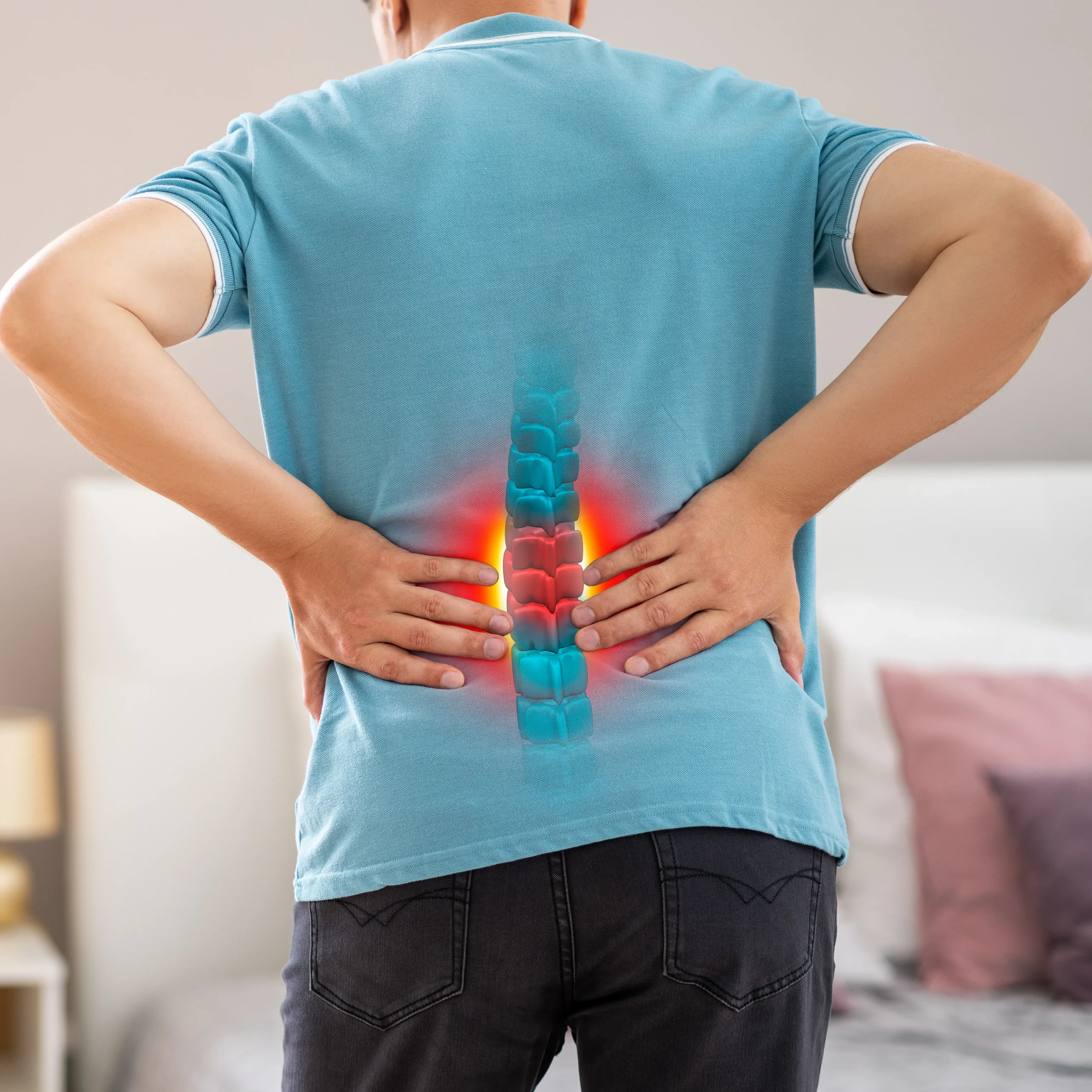
A herniated disc occurs when the soft, gel-like substance in the middle of the disc breaks through the inner aspect of the disc and protrudes out, usually in the back wall of the disc. This bulging out can pinch the nearby spinal nerves, leading to inflammation and excruciating pain that might even radiate down your leg or arm.
Even when the disc doesn’t affect the nerves, it is infamous for causing sharp and intense pain in the lower back, affecting your ability to move, especially standing upright, and interfering with your overall quality of life. For some, the pain is so unbearable that it hampers even the simplest daily tasks, like sitting, moving, or lying down to sleep.
The silver lining? Our skilled physical therapists can teach you how to manage your debilitating pain and provide the tools to return to a pain-free life!
Effective Solutions for Herniated Disc
At your first visit, one of our experienced physical therapists will perform a comprehensive assessment, including a medical history and physical examination. Afterward, your physical therapist will design a personalized treatment plan specifically for your unique situation that may include the following:
- Manual Therapy: Our physical therapists use passive movement techniques, called mobilizations, to improve the range of motion in the spine, reducing stiffness and pain.
- Stretching and Mobility Exercises: Targeted stretches to improve spine mobility and muscle flexibility are often the starting point. As you move better, you’ll feel better!
- Core Strengthening: Exercises like planks and bridges can help stabilize the spine and help in improving proper techniques when performing movements like squatting or lifting activities.
- Neural Mobilization: Our therapists may use neural mobilization or “nerve gliding” exercises to relieve nerve tension, which can reduce the radiating pain commonly associated with herniated discs.
Understanding the condition and its management is crucial. Our experts often educate the patient about body mechanics, lifestyle changes, and long-term exercise strategies to prevent future episodes. We know that your first step to recovery starts with understanding.
Why Wait?
Call Back in the Game Physical Therapy today for a comprehensive evaluation and learn the steps you can actively take to recover from a herniated disc and guard against future occurrences. Book your life-changing appointment today!
Unconventional Yet Highly Effective Tips to Help Your Back Pain
Back pain is one of the most common ailments affecting adults worldwide. While there are various conventional treatments and strategies for dealing with back pain, prevention remains the best approach. Here are a few uncommon yet highly effective tips for preventing back pain that you can try at home.
Diaphragmatic Breathing
Diaphragmatic breathing is not just for Yoga enthusiasts. This breathing technique engages your diaphragm, reduces your heart rate, and helps in relaxation. Surprisingly, it also helps in stabilizing your core. A strong core can better support your back, preventing back pain.
How to do it:
- Lie on your back with your knees bent. Place one hand on your chest and another on your abdomen.
- Inhale deeply through your nose, allowing only your abdomen to rise.
- Exhale through your mouth, engaging your core muscles.
- Practice this for 5-10 minutes daily.
Dynamic Sitting
Sitting for prolonged periods is a leading cause of back pain. Dynamic sitting encourages movement even while seated, making your core muscles work in maintaining posture.
How to do it:
- Choose a chair that allows freedom of movement. Swivel chairs are a good choice.
- Shift your weight periodically and tilt your pelvis by moving your belly button forward, and then tilt your pelvis back, allowing your lower back to “slouch” slightly backward.
- Engage your core muscles intermittently while sitting using the same diaphragmatic breathing mentioned above.
Visualization Techniques
Believe it or not, the mind plays a significant role in perceiving pain. Visualization techniques can not only help in relaxing tense muscles but can also mentally train you to handle pain better.
How to do it:
- Close your eyes and imagine a serene environment.
- Visualize the tension in your back being replaced by relaxed, calm muscles.
- Pair this visualization with deep breathing for better results.
By incorporating these unconventional strategies into your daily routine, you can help prevent the onset of back pain. Always consult our Back in the Game Physical Therapy providers before starting any new exercise to ensure it’s appropriate for you.

Matt Hodgens
PT, DPT
Matt Hodgens is a physical therapist born and raised in Atlanta, Georgia. He grew up in Dacula, where he played baseball alongside our own Andrew Kneeburg and for Mill Creek High School. He earned his degree in Sport & Exercise Science from the University of Alabama before completing his Doctor of Physical Therapy degree at Georgia State University.
Matt developed a passion for physical therapy through his love of strength training and preparing for baseball. His interest in understanding how the body moves and heals led him to pursue a career helping others regain confidence in their bodies and movement. He is certified in Dry Needling and enjoys working with patients as they return to the activities they love.
Outside the clinic, Matt enjoys spending time with his wife, Kaylee, and their two dogs, Layla and Logan. A devoted University of Alabama fan, he and his UGA graduate wife enjoy a friendly rivalry during football season. Matt is also a self-proclaimed foodie and hopes to open a food truck when he retires.
- University of Alabama
- B.S. Sport & Exercise Science
- Georgia State University
- Doctor of Physical Therapy (DPT)
- Sports Injuries
- Orthopedic Rehabilitation
- Movement Performance
- Dry Needling
Patient Success
“The staff was fantastic and the PT program allowed me to exceed all performance goals.”
“I received treatment at Back in the Game PT after undergoing a total knee replacement. The staff was fantastic and the PT program allowed me to exceed all performance goals. Special thanks to PT Tech Lizzy. She was always helpful and displayed a positive attitude. You can tell she enjoys helping clients get better.”
– Don
Leave a ReviewWe’re Hiring – Join Our Team!

Are you passionate about helping patients get back in the game? We’re growing and looking for dedicated physical therapists and team members to join us. If you—or someone you know—are interested in building a rewarding career in a supportive, patient-focused environment, we’d love to connect. Know a great PT? Share this newsletter with the physical therapists in your life and help us spread the word!
View Open PositionsDouble Knees to Chest
How to Do It
Start by lying on your back with your knees bent. Slowly bring both knees toward your chest and gently grasp them with your hands. Relax your shoulders and keep your lower back comfortably against the floor. Hold the stretch for 30 seconds, then slowly return to the starting position. Repeat as directed.

Apple & Peanut Butter Energy Bites
Looking for a quick, satisfying snack? Crisp apple slices paired with natural peanut butter, crunchy granola, and a sprinkle of cinnamon provide the perfect combination of fiber, healthy fats, and protein to keep you energized between meals.
Ingredients
- 1 large apple, sliced
- 2 tbsp natural peanut butter (or almond butter)
- 2 tbsp low-sugar granola
- 1 tsp chia seeds (optional)
- ¼ tsp ground cinnamon
- 1 tsp honey (optional)
Instructions
- Wash and slice the apple into wedges.
- Spread a thin layer of peanut butter on each slice.
- Sprinkle with granola, chia seeds, and cinnamon.
- Drizzle lightly with honey if desired.
- Serve immediately for a crunchy, protein-packed snack.